
Precision in Every Instrument — Excellence in Every Field
In clinical practice, dental tweezers are frequently used as a tool for dentists. These precision instruments enable to treat tiny objects safely, effectively, or hygienically, either performing regular checkups and highly complex dental operations
Efficient and spring-action dental tweezers are used to pick up or hold, position and extract minute in or around the mouth of the item. These are crucial for precision handling or infection control during dental operations.
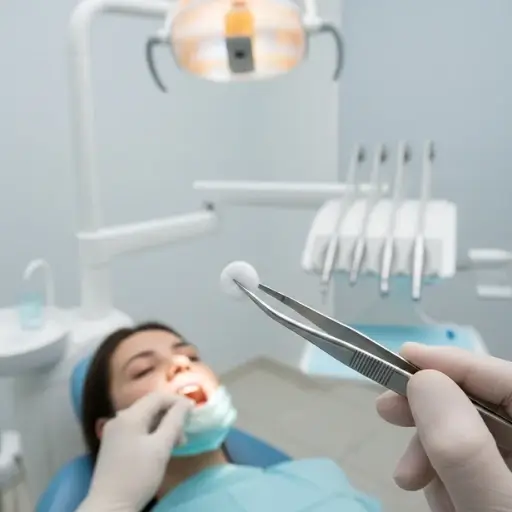
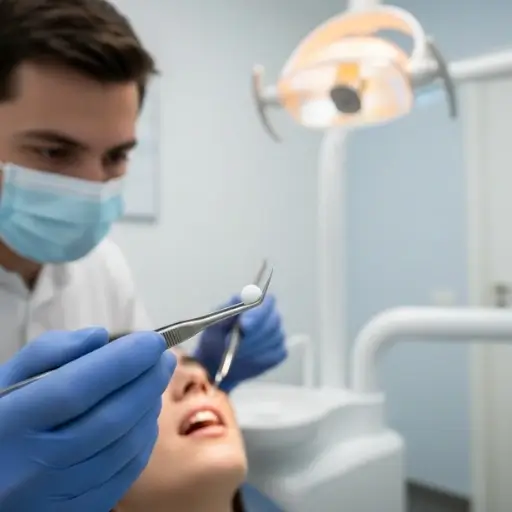
In confined oral areas, dental tweezers are essential for the specific work. Avoiding hand contact, clinical efficiency, and a better workflow all contribute to preventing infection.
Many dental operations would be slower, less precise, and less sanitary if there were no dental tweezers.
The majority of dental tweezers are made in a standard length of 15 cm, which achieves the ideal balance between control and comfort.
Smooth dental tweezers feature polished, flat tips designed for delicate handling.
Smooth dental tweezers frequently use cotton pellets, gauze placement, and fragile dental materials.
Serrated dental tweezers have micro-grooves on the tip for enhanced grip.
Slippery or metallic items, Matrix bands and Small dental instruments and used commonly in serrated dental tweezers.
Straight Dental Tweezers
Extra-oral handling
Improved visibility
Easier access to posterior teeth
Reduced wrist strain
Angled dental tweezers are preferred by many clinicians for intra-oral procedures.
Dental tweezers are used across multiple dental specialties:
✔ Operative Dentistry
It is the Placement of cotton pellets and Handling restorative materials.
✔ Endodontics
Transferring paper points and Handling small accessories
✔ Prosthodontics
Managing crowns and impression materials
✔ Oral Surgery
Placing gauze and Removing debris
✔ Orthodontics
Handling elastic modules and brackets
Dental tweezers are made from medical-grade stainless steel which maintains the quality. It resists damage which is caused by chemical reaction, Rust-free or this item can survive high temperature and pressure.
Precision machining, Fine polishing and Tip alignment testing is professional dental tweezer undergo
Dental tweezers are reusable instruments designed for repeated sterilization.
Steam autoclave (preferred), Ultrasonic cleaning and Chemical disinfection.
Proper care ensures the patient’s safety or extends instrument lifespan.
If Smooth so delicate materials and Serrated then firm grip
General use Straight and Angled posterior access.
Standard 15 cm for comfort
Smooth surface and Perfect tip alignment
Dental tweezers are essential instruments that support precision, hygiene, and efficiency and accuracy in every dental clinic. For understanding the dental tweezers consider types, designs, and applications. It helps dental professionals choose the right instrument for optimal clinical performance.
The function of Dental tweezers is to handle cotton, gauze or dental materials. Small instruments are also important during dental procedures.
Mostly, the college tweezers are 15 cm long.
Of course, high-quality or stainless-steel dental tweezers are autoclavable and damage free.
S.I.E Sialkot 51310 Pakistan
© 2025 4Tech Bro. Manufacturer & Exporter of Surgical, Dental, Plastic Surgery, Beauty and etc Instruments. All rights reserved.