
Precision in Every Instrument — Excellence in Every Field
Let’s be honest about the operating room environment for Ear, Nose, and Throat (ENT) specialists. It is completely different from general surgery. In most surgical fields, doctors have a relatively wide operating area. They can easily see what they are doing and have plenty of room to maneuver their hands and tools.
ENT surgery does not offer that luxury. Specialists are forced to work in deeply recessed, incredibly dark, and tight spaces. Whether a doctor is performing a delicate micro-surgery inside the middle ear, fixing a deviated septum, or removing polyps from a nasal cavity, the anatomical pathways are narrow. To make matters more complicated, these tiny spaces are surrounded by critical facial nerves and major blood vessels.
In this environment, a fraction of a millimeter changes everything. You can have the most highly trained surgeon in the world, but if the tool in their hand is bulky, stiff, or poorly balanced, the patient’s safety is immediately put at risk. This is exactly why high-precision surgical instruments are strictly critical for modern ENT procedures.

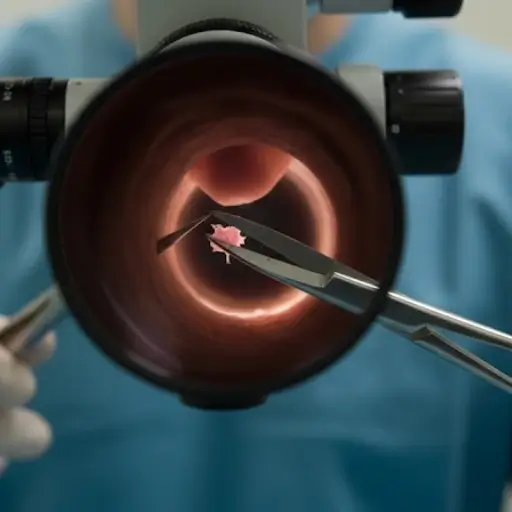
A common mistake we see in the global medical supply chain is the reliance on standard-grade instruments for specialized surgeries. Clinic procurement managers often try to stretch their budgets by ordering basic tools. However, in the long run, this always causes problems.
Standard tools are usually manufactured with wider tolerances. The metal might be slightly thicker, or the hinge of a pair of scissors might have a tiny bit of wobble. In a wide-open abdominal surgery, a doctor might not even notice that wobble. But if an ENT surgeon is looking through a surgical microscope, trying to snip a tiny piece of tissue from the vocal cords, a wobbly hinge means the scissors will chew and tear the tissue instead of cutting it cleanly.
Furthermore, standard instruments are often too bulky. When a surgeon inserts a bulky tool into a narrow nasal passage, the tool itself blocks their line of sight. They end up working blind.
When we talk about high-precision manufacturing, we aren’t just using a marketing buzzword. We are talking about strict, measurable differences in how a tool is forged, milled, and finished. Here is what actually separates high-precision instruments from the rest of the pack:

Quality does not start in the operating room; it starts on the factory floor. At 4techbro, we know that manufacturing medical instruments requires an uncompromising approach to quality control.
Creating a dependable instrument starts with sourcing the right raw materials. We exclusively use premium medical-grade stainless steel. This specific grade of steel is chosen for a very important reason: durability against sterilization. Surgical tools go through a brutal cleaning process. They are soaked in harsh enzymatic cleaners, scrubbed aggressively, and then blasted with high-pressure, high-heat steam inside autoclaves.
Cheap steel simply cannot survive this process. It will quickly develop micro-pitting (tiny rust spots) or the joints will seize up. Premium stainless steel, combined with exact heat-tempering during the manufacturing process, ensures the tool remains rust-free, incredibly strong, and razor-sharp even after hundreds of surgeries.
The demand for better, safer surgical tools is a global conversation. Healthcare providers worldwide are pushing for minimally invasive procedures because patients recover faster, experience less pain, and spend less time in the hospital. But minimally invasive surgery is impossible without high-precision micro-instruments.
Whether we are exporting shipments to major hospital networks in Germany and the USA, or supplying fast-growing medical markets in Brazil, Spain, and Indonesia, the expectation is exactly the same. Surgeons everywhere need reliable tools that perform flawlessly. By maintaining strict international export standards, we ensure that every clinic we supply is fully equipped to offer the highest standard of patient care.
At the end of the day, an ENT surgeon’s primary goal is to heal the patient while causing the absolute minimum amount of trauma to the surrounding tissue. High-precision surgical instruments are the critical bridge that makes this possible. They offer the exact control, durability, and tactile feedback required to navigate the most complex anatomies. For hospital buyers and clinic managers, investing in top-tier instruments from a trusted, experienced manufacturer isn’t just about upgrading your inventory—it is a direct investment in the safety and success of every patient who walks through your doors.
Surgeons often perform back-to-back procedures that can last for hours. If an instrument is heavy or poorly balanced, it quickly causes hand and wrist fatigue. A tired hand leads to minor tremors. High-precision tools are carefully balanced to feel practically weightless, allowing the surgeon to maintain a perfectly steady hand from the start of the surgery to the final stitch.
While general tools might be used in a life-or-death crisis, they are highly discouraged for standard ENT work. General tools simply do not have the micro-tips or the low-profile shafts required to safely navigate tight cavities like the ear canal or sinuses without causing unnecessary trauma to the patient.
It has a massive impact. Precision instruments allow for much smaller, cleaner cuts and more accurate tissue manipulation. Because the surrounding healthy tissue isn't accidentally bruised or torn by a dull or misaligned tool, the patient experiences significantly less postoperative swelling and pain, leading to a much faster recovery.
Buyers should always look beyond the price tag. It is vital to partner with a manufacturer who has a proven track record of exporting to heavily regulated markets. Look for suppliers who use verified medical-grade stainless steel, offer warranties against manufacturing defects, and have strict, documented quality control processes in place before shipping.
S.I.E Sialkot 51310 Pakistan
© 2025 4Tech Bro. Manufacturer & Exporter of Surgical Instruments. All rights reserved.