
Precision in Every Instrument — Excellence in Every Field
The modern Operating Room (OR) is a miracle of hygiene, but a nightmare for the landfill. It is estimated that a single operation produces significantly more waste than a family of four produces in a week. A massive portion of single-use rigid plastics, specifically trays, bowls, and liners which is found in surgical kits.
For decades, the industry argued that “sterile” means plastic, which is not much true.
As hospitals race, meet Net Zero goal material science which has caught up. Manufacturers are now utilizing agricultural by products and advanced biopolymers to create surgical packaging that maintains sterility without remaining in a landfill for 500 years.
Here are the 5 biodegradable materials that are reshaping the manufacturing of eco-friendly surgical kits.
If you have purchased electronics recently, you’ve seen molded fiber replacing Styrofoam. In the medical sector, high-grade molded fiber biodegradable Surgical Trays is rapidly becoming the gold standard for outer trays and kidney dishes.
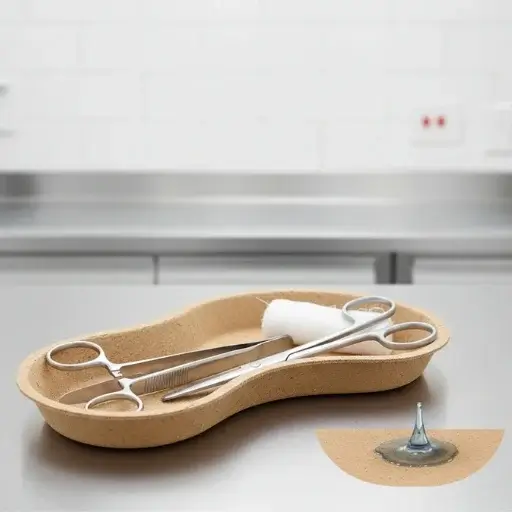
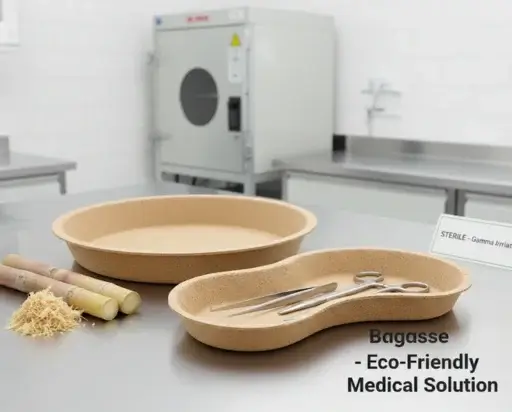
Bagasse is a dry, pulpy residue which is left after extracting juice from sugarcane. Manufacturers are upcycling into medical-grade containers, instead of burning this waste.
Sterility Note: Bagasse can withstand high temperatures, make it compatible with Ethylene Oxide (EtO) and Gamma irradiation sterilization processes.
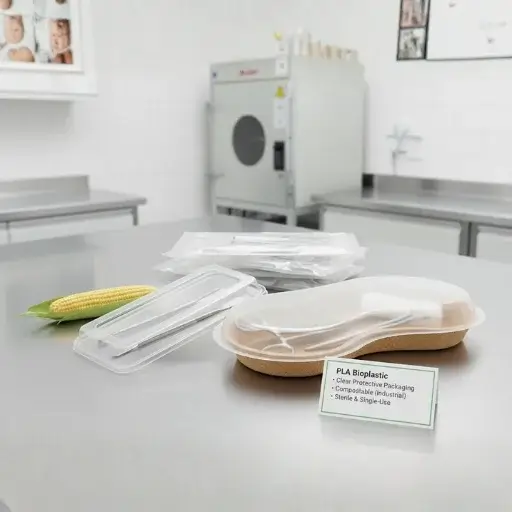
PLA is the most common “bioplastic” in biodegradable Surgical Trays. It looks, feels, and acts like clear plastic (PET), but it is derived from fermented plant starch (usually corn or cassava).
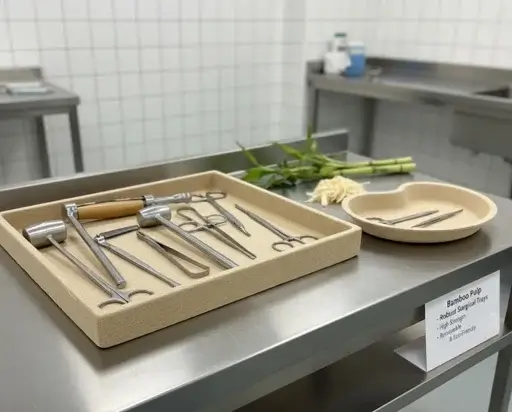
Its long fibers provide exceptional strength, making it a robust competitor to traditional polypropylene trays.
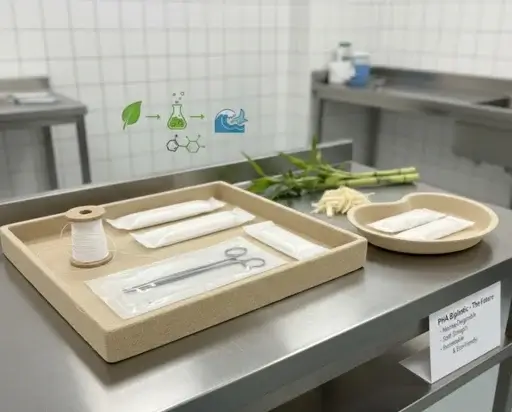
This is the cutting edge of biotech. Unlike PLA (which needs industrial composting), PHA is marine-degradable and soil-degradable.
This is the first question every procurement officer asks. Is eco-friendly meant to be higher infection risk?
The answer is no, provided the materials meet the right standards.
When sourcing eco-friendly surgical kits, must look after the compliance with ISO 11607 (Terminally Sterilized Medical Devices Packaging). This standard tests for:
Transition of biodegradable surgical trays does not require an overhaul of your surgical techniques. Your supply chain is changing. By choosing kits which are made from Molded Fiber, Bagasse, or Bamboo. Hospitals can divert tons of plastic waste from landfills without compromising patient safety.
Of course, sterility is determined by the sterilization process and the barrier integrity. It is not just the material itself but biodegradable trays (like molded fiber or PLA) must pass the same rigorous ISO 11607 standards as traditional plastic. Their testing ensures they effectively block bacteria or viruses for their entire shelf life.
Generally, no but most biodegradable materials are thermoplastic or fibrous, and cannot use the high heat or moisture of steam autoclave (121°C+).
Molded Fiber: Sometimes absorb moisture and lose structural integrity.
Instead those kits which are typically pre-sterilized by the manufacturer with using Ethylene Oxide (EtO) or Gamma Irradiation, which are effective at lower temperatures.
No, rather than raw paper pulp absorbing water, medical-grade molded fiber is treated with FDA-approved hydrophobic (water-repelling) coatings. These trays can hold saline, blood, or iodine for the duration of a standard surgery (typically rated for 4+ hours of fluid contact) without leaking or collapsing.
This depends on contamination:
Non-Contaminated (Outer Wraps/Packaging): These can be sent to industrial composting facilities, in some cases, paper recycling streams and check local municipality's rules on medical packaging.
If the sterile barrier (the outer pouch) remains intact, biodegradable kits typically have a shelf life of 1 to 3 years. This is slightly shorter than the 5-year standard for heavy-duty plastic, so procurement teams should practice "First-In, First-Out" (FIFO) inventory management.
Currently, biodegradable carry options have a premium of roughly 10-15% over mass-produced plastic trays. However, hospitals often use these costs through:
Procurement Incentives: Meeting government’s Green Procurement quotas which unlock grants and rebates.
S.I.E Sialkot 51310 Pakistan
© 2025 4Tech Bro. Manufacturer & Exporter of Surgical, Dental, Plastic Surgery, Beauty and etc Instruments. All rights reserved.